
Ensuring Combat Readiness Through Advanced Field Medical Solutions
The Role of Modern Medical Equipment in Military and Paramilitary Operations
In every tactical operation, preparedness is not limited to weaponry or communication systems — it equally extends to combat medical readiness. The ability to respond instantly to injuries in the field can determine mission success and save countless lives. For this reason, Government and Defense Procurement Officers across India, including those serving in the Army, BSF, CRPF, ITBP, and SSB, are focusing on sourcing reliable, battle-tested combat medical kits designed to meet the rigorous standards of defense operations.
A combat medical kit today is more than a simple pouch of first aid materials. It represents an integrated, scientifically designed system that provides immediate control of bleeding, wound dressing, and stabilization until evacuation. As part of the modernization and indigenization efforts in defense procurement, priority is given to equipment that is field-proven, easy to deploy, and suitable for both high-altitude and counter-insurgency environments.
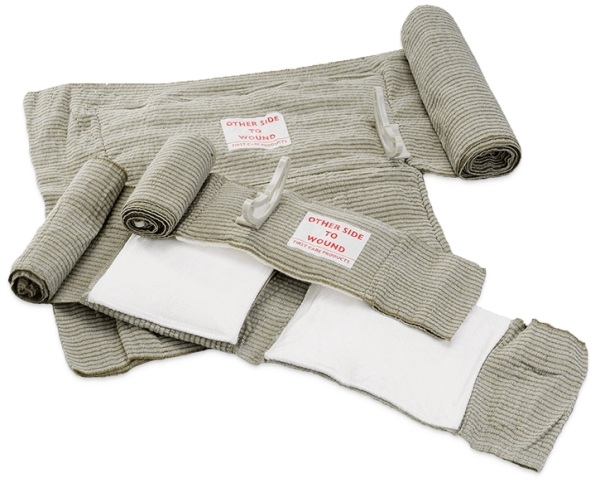
Combat Medical Kit: Essential Component of Operational Readiness
A combat medical kit is tailored specifically for soldiers and Quick Reaction Teams (QRTs) deployed in active zones. It contains advanced trauma management tools such as tourniquets, emergency bandages, hemostatic dressings, and airway devices. Each component is selected to perform under pressure, often in environments where medical evacuation may be delayed.
Procurement officers evaluating combat medical kits typically assess criteria like durability, shelf life, ease of application with one hand, and compliance with international military standards. The emergency bandage 4 inch, for instance, has become a standard inclusion in most modern kits due to its multifunctional capability — serving as both a pressure dressing and a tourniquet substitute when needed.
First Aid Dressing Military: Meeting Battlefield Demands
In conventional or unconventional warfare, injuries caused by shrapnel, gunfire, or explosions require first aid dressing military solutions that can control hemorrhage effectively. Unlike civilian first aid dressings, military-grade variants must function in extreme temperatures and be sterile for extended storage periods.
Procurement specifications for first aid dressing military products generally emphasize quick application, non-adherent pads, and vacuum-sealed sterile packaging. These dressings are crucial not only for front-line soldiers but also for paramilitary personnel engaged in internal security and border protection duties.
Emergency Bandage 4 Inch: Proven Battlefield Reliability
The emergency bandage 4 inch, widely known as the “Israeli Emergency Bandage,” has become synonymous with modern combat medicine. Its self-applying pressure bar mechanism allows a wounded soldier to stop bleeding independently, even under fire. This innovation has made it indispensable in every field dressing for soldiers kit.
Procurement officers on platforms like GeM (Government e-Marketplace) and other authorized channels often search for “emergency bandage 4 inch” or “bleeding control bandage GeM” to identify suppliers who can provide certified, NATO-grade items with traceable quality assurance.
Hemostatic Dressing for Bleeding Control: Speed and Efficiency in Action
Uncontrolled bleeding remains the leading cause of preventable death in combat. The introduction of hemostatic dressing for bleeding control — impregnated with agents such as kaolin or chitosan — has revolutionized battlefield medicine. These dressings accelerate clot formation and can stop arterial bleeding within seconds.
Defense procurement teams prioritize hemostatic dressing materials that are compact, vacuum-sealed, and have proven efficacy in laboratory and field evaluations. When combined with a tourniquet and dressing combo, they offer the most effective means of hemorrhage control in tactical scenarios.
Tactical First Aid Kit: Preparedness for Every Mission
A tactical first aid kit serves as a modular system adaptable to different mission profiles. For instance, a kit designed for a high-altitude patrol may emphasize frostbite and burn dressings, while one for desert operations may focus on hydration and bleeding control.
Procurement officers responsible for unit-level logistics often specify kits that can be easily mounted on tactical vests, vehicles, or stretchers. When acquiring tactical first aid kit solutions, considerations include waterproof casing, standardized labeling, and ease of replenishment.
For the QRT medical kit items, additional emphasis is placed on portability, rapid deployment, and compact design — enabling medics or team leaders to administer aid within the “golden hour” of injury.
Tourniquet and Dressing Combo: Dual Protection for Critical Injuries
In the most severe combat situations, where seconds decide survival, the tourniquet and dressing combo offers dual protection. A properly applied tourniquet stops catastrophic bleeding instantly, while an emergency dressing provides sustained pressure and wound coverage.
Defense buyers frequently look for this combination when building combat trauma kits for BSF, CRPF, and other rapid response units. High-quality tourniquets are expected to meet NATO standards and withstand mechanical stress, while dressings should be compact and vacuum-sealed for rapid deployment.
Combat Trauma Kit for BSF and Other Forces
The combat trauma kit for BSF and other paramilitary forces is a specialized assembly designed for operational emergencies. It is often customized with inputs from field medics and based on the terrain or mission type. Items typically included are:
- Emergency bandage 4 inch
- Hemostatic dressing for bleeding control
- Tactical tourniquet
- Chest seal for open wounds
- Water-based burn dressings
- Splints and adhesive tapes
- Sterile gloves and trauma shears
Procurement officers sourcing these kits evaluate vendors based on quality certification (CE, ISO, or FDA registration), field performance data, and readiness for bulk supply under defense procurement guidelines.
QRT Medical Kit Items: Designed for Rapid Response
Quick Reaction Teams (QRTs) play a vital role in both counter-terror and disaster-response operations. Their medical kits must enable immediate, on-site stabilization. QRT medical kit items are therefore procured with high scrutiny for reliability and versatility.
A comprehensive QRT medical kit supports airway management, bleeding control, burn care, and limb stabilization. Products like the emergency bandage 4 inch, hemostatic dressing for bleeding control, and tourniquet and dressing combo form the backbone of these kits.
Bleeding Control Bandage GeM: Simplifying Government Procurement
With the adoption of the Government e-Marketplace (GeM), procurement officers can now streamline sourcing through verified vendors. Searches such as “bleeding control bandage GeM” or “wound dressing for armed forces” help identify compliant suppliers who meet defense specifications.
Vendors offering these items through GeM are encouraged to maintain transparent documentation, including test reports, batch certifications, and long shelf-life assurance — ensuring reliability during both peacetime stockpiling and active deployment.
Wound Dressing for Armed Forces: Reliability in Every Layer
A wound dressing for armed forces must adhere to stringent standards of sterility, absorbency, and durability. These dressings are essential in both field and base medical facilities for immediate response to lacerations, abrasions, and deep wounds.
The modern procurement focus is shifting toward compact, vacuum-sealed packs that can fit within personal first aid pouches and vehicle kits. Defense logistics officers seek products compatible with NATO stock numbering, ensuring interoperability and uniformity across supply chains.
Conclusion: Prioritizing Life-Saving Readiness
Every Government and Defense Procurement Officer plays a decisive role in strengthening the nation’s combat medical readiness. By ensuring the availability of advanced combat medical kits, emergency bandages, hemostatic dressings, and tactical first aid kits, these officers uphold the highest standard of soldier care.
Investment in reliable, field-proven medical solutions directly enhances operational resilience and morale. The modern battlefield demands that every soldier not only be combat-ready but also medically protected — and through informed procurement, that mission becomes achievable.